There is a moment that happens when you buy something new. It is clean, untouched, factory-perfect. For some people, that moment is the end goal. For me, that moment is the beginning.
I have always had the urge to modify things. Cars, computers, tools, electronics, software, furniture, websites. If it can be opened, rewired, reprogrammed, repainted, or reimagined, I am probably going to do it. Not because the original version is bad, but because it is not mine yet.
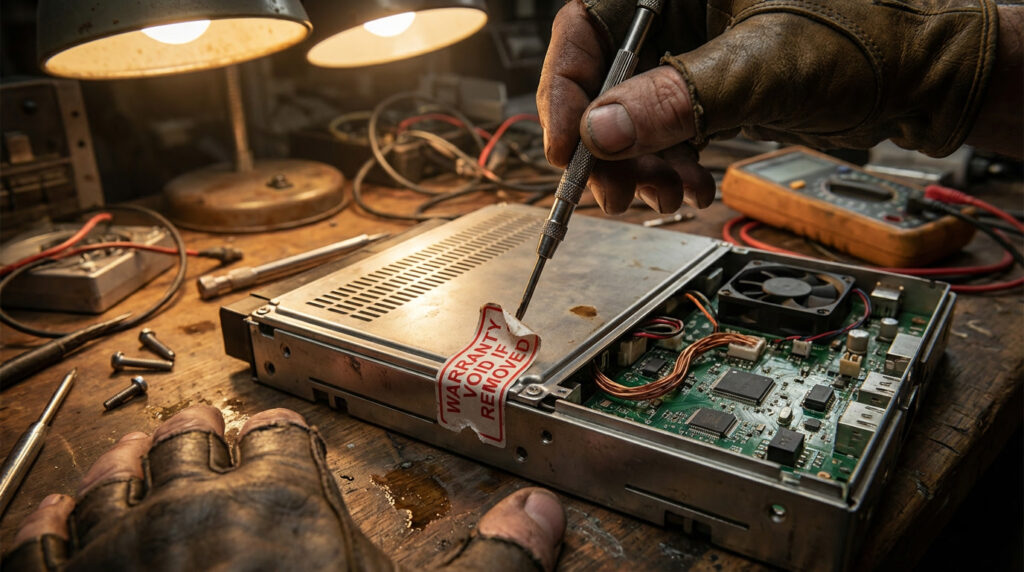
The funny thing is, we are taught from a very young age not to do this. Do not open it. Do not take it apart. Do not change it. You might break it. You will void the warranty.
That phrase, “voiding the warranty,” is supposed to scare you. It implies risk, loss, and irresponsibility. But over time, I have learned that voiding the warranty is often where the real value begins.
Ownership Versus Possession
There is a difference between owning something and possessing it. You can possess a stock car, a prebuilt PC, a factory tool, or a default piece of software. Millions of other people possess the same thing.
Ownership happens when you invest yourself into it. When you understand it well enough to change it. When you accept responsibility for what happens next.
The moment I modify something, I cross that line. If it breaks, that is on me. If it works better than before, that is because I put the effort in. Either way, it becomes personal.
That shift is powerful.
The Reward Is in the Process
Modifying things is not always about the end result. Sometimes the reward is the process itself. Taking something apart teaches you how it was designed. Fixing a problem forces you to understand why it existed in the first place. Improving something requires you to think critically about how it could be better.
I have learned more from broken projects than successful ones. I have learned more from mistakes than from manuals. When you void the warranty, you are forced to stop relying on someone else to make it right. You become the support department.
That responsibility builds confidence fast.
Fear Is the Only Real Barrier
Most people are not incapable of modifying things. They are just afraid. Afraid of breaking something expensive. Afraid of not knowing how to fix it. Afraid of making it worse instead of better.
That fear is understandable, but it is also limiting.
Every skill I have today started with not knowing what I was doing. The only difference between then and now is that I kept opening things anyway. I accepted that breaking something was part of learning how it worked.
Once you do that a few times, the fear loses its grip.
Why Factory Perfect Is Overrated
Factory designs aim for the middle. They are built to satisfy the largest number of people at the lowest risk and cost. That makes sense for manufacturers, but it does not make sense for individuals with specific needs, tastes, or ideas.
I do not want “good enough for everyone.” I want “perfect for me.”
That might mean trading safety margins for performance. It might mean sacrificing resale value for usability. It might mean doing things the manufacturer never intended.
That is not recklessness. That is intentional design.
Making It Yours Changes How You Treat It
Something interesting happens after you modify an object. You respect it more. You take better care of it. You notice problems sooner. You feel connected to it in a way that never happens with off-the-shelf gear.
That connection is not sentimental. It is practical. You know how it works because you made it work. You know its strengths and weaknesses because you created them.
It stops being disposable.
This Is the Heart of FlesherNET
FlesherNET exists because of this mindset. It is a place for people who are not satisfied with defaults. People who want to understand, improve, and share what they learn along the way.
Modifying things is not about showing off or being reckless. It is about curiosity, ownership, and growth. It is about refusing to accept that something is finished just because someone else decided it was.
Voiding the warranty is not the goal. It is simply a side effect of caring enough to make something truly yours.
And honestly, I have never once regretted that sticker coming off.