The controversy surrounding Jimmy Kimmel’s comments after Charlie Kirk’s death got me thinking about something much bigger than a late-night television show.
I didn’t agree with Kimmel’s comments, and I understood why people were upset. But watching the reactions, including the involvement of government officials, raised some questions for me about free speech, media responsibility, and how we treat people whose views are different from our own.
It also made me think about how those things fit together with my Christian faith.
I have some pretty strong opinions on these subjects, but I don’t believe having strong convictions means I have to demand that everyone else share them.
Free Speech Means Defending More Than My Own Opinions
I believe in freedom of speech, including for people who say things I find offensive or completely disagree with.
That doesn’t mean I have to approve of what someone says. I can criticize their comments, stop watching their show, or decide I don’t want to support them. Other people have those same freedoms.
What concerns me is how quickly disagreement can turn into an effort to silence someone altogether.
We’ve reached a point where a single comment, sometimes taken without its full context, can result in campaigns to get someone fired, removed from a platform, or publicly destroyed. Comedians have to consider whether a joke will trigger outrage rather than laughter. And political disagreements can turn into personal attacks before anyone has even tried to understand the other person’s position.
I’m not saying people should be immune from consequences. What someone says can have real effects, and criticism is itself a form of free speech.
But I do question whether our reactions are always reasonable or proportional.
I also see a double standard in how people approach this. We want the freedom to express our own beliefs, but sometimes we’re much less enthusiastic about extending that same freedom to people on the other side of an issue.
That’s not a principle. That’s picking favorites.
Where the Kimmel Controversy Concerned Me
The Kimmel situation brought another concern into the picture: the role of government.
I don’t believe elected officials or government appointees lose their right to express an opinion just because they hold public office. The president can criticize a television personality. So can the chairman of the FCC.
But there’s a difference between expressing disapproval and suggesting that government authority might be used against a broadcaster because of what someone said.
Some of the comments surrounding the Kimmel controversy came uncomfortably close to that line for me, particularly when the FCC became involved.
The First Amendment limits government action, not every decision made by a private television network. ABC has the ability to make decisions about its programming. But when government officials with regulatory authority weigh in, it’s reasonable to question whether their comments might create pressure beyond ordinary public criticism.
I don’t claim to know every consideration that went into ABC’s decision. My concern is with the principle involved.
I don’t want the government deciding which opinions are acceptable on television, even when I dislike the person expressing them.
And if I expect that protection for my own beliefs, I have to be willing to defend it for others.
When News Starts Looking Like Entertainment
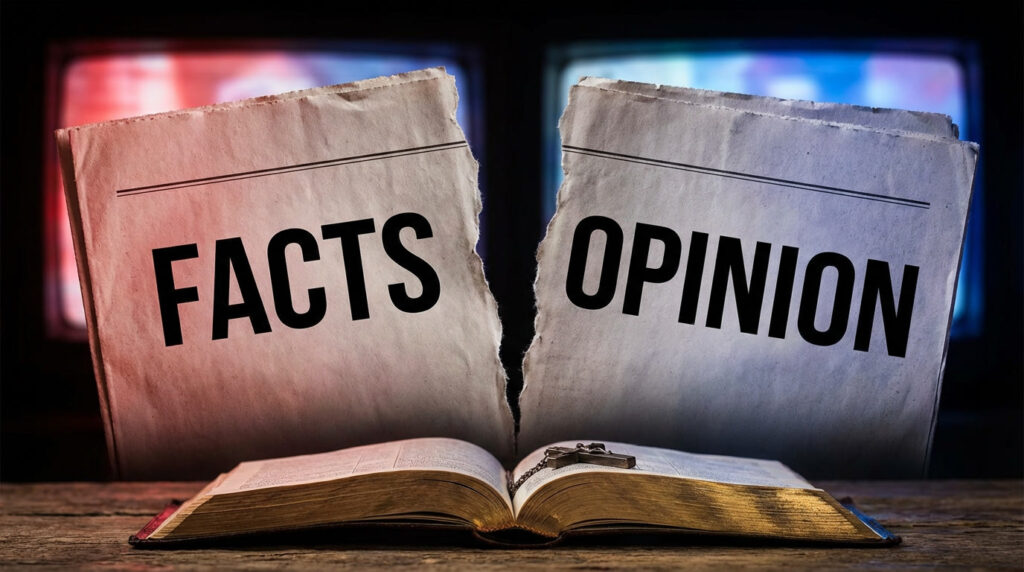
The controversy also brought me back to another frustration I’ve had for years: how difficult it has become to separate factual reporting from political commentary.
I expect news organizations to report what happened, provide relevant context, and give people the information they need to reach their own conclusions.
Instead, it often feels like I’m being told what conclusion I’m supposed to reach.
I’m not suggesting that every journalist is deliberately misleading people. Bias can influence reporting without anyone consciously deciding to distort the facts. But there are also commentators and programs that seem far more interested in provoking an emotional reaction than helping viewers understand an issue.
And let’s not pretend ratings don’t play a role.
Conflict gets attention. Outrage keeps people watching. An aggressive argument can make for entertaining television, even when it does very little to explain what’s actually happening.
The result is that reporting and commentary can become so intertwined that it’s difficult to tell where the facts end and someone’s interpretation begins.
I shouldn’t have to visit three different news outlets just to discover important details the first one left out.
Of course, no news report can include every fact about a complicated event. Decisions have to be made about what’s relevant. But leaving out information that materially changes the meaning of a story is a different matter.
That’s one reason I find the idea behind Ground News interesting. It helps people compare coverage from different sources and see how the same event is presented across the political spectrum.
It’s a useful tool, but the fact that I might need something like that to understand a news story says a lot about my frustration with modern reporting.
I’ve seen a similar problem outside traditional news. I used to enjoy watching the History Channel, but somewhere along the way, programs marketed around history started sharing space with sensationalized reality entertainment. Shows like Amish Mafia blurred the distinction between documentary-style presentation and dramatized storytelling.
I understand that television is a business. But when a channel builds its reputation on informing people, the way it presents entertainment can affect how much I trust the rest of its programming.
At times, I wonder whether some news networks are heading down the same road as tabloids.
I’m not asking anyone to stop expressing opinions. I just want reporting to be recognizable as reporting and commentary to be recognizable as commentary.
Give me the facts and the important context. Then let me decide what I think.
Political Parties Aren’t Sports Teams
My frustration doesn’t stop with the media.
I’m a conservative Christian, and I tend to vote for Republican candidates because their positions on certain issues more often align with my beliefs.
But I don’t identify myself as a Republican.
I look at the candidates, their positions, and what I believe they would actually do in office. If I thought a Democrat was the better candidate, I’d vote for that person.
Sometimes voting feels less like choosing the best candidate and more like deciding which option concerns me the least. I doubt I’m alone in that.
What bothers me is how much political discussion has become about defending a party rather than evaluating an issue.
An idea shouldn’t suddenly become terrible because someone from the opposing party suggested it. And questionable behavior shouldn’t become acceptable just because the person responsible happens to belong to the party we usually support.
Yet that kind of thinking seems increasingly common.
I’ve become concerned about how much energy goes into political careers, party loyalty, and attacking opponents, rather than serving the people those officials were elected to represent.
I don’t think every politician is corrupt, and I know there are genuine differences in how people believe government should operate. But I also don’t think we should stop questioning our own side just because we’re worried about giving the other side an advantage.
If we’re going to demand honesty and accountability, we ought to demand it consistently.
How My Faith Fits Into This
This is where my Christian beliefs become especially important to me.
I have convictions about right and wrong that come from my understanding of Scripture. Some of those convictions are at odds with what other people believe, including people I care about.
For example, I hold traditional Christian beliefs about sexuality and gender. I recognize that others interpret these issues differently, including other Christians.
I’m not going to pretend I believe something I don’t. But I also don’t believe my convictions give me permission to mistreat someone who lives or believes differently.
I have friends who are part of the LGBTQ community. They know where I stand, and I know we don’t agree on everything.
That hasn’t stopped us from being friends.
We respect each other. We don’t spend our time trying to force one another to change. And I believe that if someone attacked me simply for holding my beliefs, those friends would defend my right to have them.
I’d do the same for them.
That matters to me because I think we’ve reached a point where people sometimes assume disagreement automatically means hatred.
I don’t believe it does.
I also recognize that the way someone expresses a belief matters. Words can hurt people, and simply claiming good intentions doesn’t excuse treating someone poorly.
My responsibility as a Christian isn’t just to stand by what I believe. It’s also to consider how I treat the person standing in front of me.
Jesus taught us to love our enemies and pray for those who persecute us (Matthew 5:44). If that’s how I’m supposed to treat an enemy, I certainly shouldn’t have trouble treating someone respectfully just because we disagree about politics, religion, or how they live their life.
And James 4:12 reminds me that I am not the ultimate judge of my neighbor.
I can have moral convictions without appointing myself the authority over someone else’s life.
The Same Freedom Has to Apply to Everyone
There’s another reason I believe Christians should be particularly careful about demanding that opposing viewpoints be silenced.
I want the freedom to talk about my faith.
I want to be able to discuss Scripture, explain what I believe, and share the gospel without the government deciding that my message is unacceptable.
But how can I reasonably expect that freedom for myself while supporting the silencing of someone whose beliefs are different?
I can’t.
The same freedom that allows someone to criticize Christianity allows me to explain why I believe in it. Protecting that freedom doesn’t mean I agree with their criticism.
It means I understand that the principle matters more than whether I happen to like what’s being said.
My faith doesn’t require everyone around me to agree with me. And I don’t think treating people respectfully requires me to abandon my faith.
There has to be room for both conviction and disagreement.
Where I Stand
I know some people will disagree with what I’ve written here. That’s fine. In fact, it would be pretty strange to write an article defending freedom of expression and then get upset because someone expressed a different opinion.
What I hope we can get better at is separating disagreement from hostility.
I’d like to see news organizations put more effort into informing people than provoking them. I’d like to see politicians spend less time fighting for their party and more time doing the jobs they were elected to do. And I’d like to see the rest of us become a little more willing to hear someone out before deciding they’re the enemy.
I don’t expect everyone to agree with my politics or my faith. I don’t even expect everyone to agree with my opinions about free speech.
But I do believe we can disagree without trying to ruin each other’s lives.
And if I’m going to ask someone to respect my right to believe and speak freely, I’d better be prepared to offer them that same respect.